Metric
June 02, 2026

Smart Solutions for Small Apartments: Japandi Design with Multifunctional Furniture

Living in an apartment of 30 to 60 square metres in a major city such as Jakarta is no longer a compromise — it is a lifestyle deliberately chosen by a generation of young professionals who prioritise strategic location, mobility, and the efficiency of daily life. Yet one challenge almost invariably accompanies this choice: how do you make a space this small feel genuinely open, functional, and aesthetically considered?

The answer has long been discovered in Japan and Scandinavia — two countries that, through the constraints of limited land and climate, have given rise to the most efficient design philosophies in the world. The fusion of the two, now widely recognised as Japandi design, is the most complete answer to the small apartment challenge in Indonesia today.

This article explores in depth what Japandi is, why it works so effectively for compact apartments, and — most critically — how the right interior system is the key to realising it in reality, not merely as an aesthetic on paper.

1. Understanding Japandi: A Design Philosophy from Two Cultures

Japandi is a portmanteau of *Japanese* and *Scandinavian* — the fusion of two aesthetics that, despite originating from opposite sides of the world, share deeply aligned core values.

From Japanese aesthetics, Japandi draws on the concept of *wabi-sabi* — the beauty in imperfection and natural simplicity — as well as the philosophy of *ma* (間), the value of empty space. In interior design, this means treating every unoccupied surface as a design element in itself, not something that must immediately be filled.

From Scandinavian aesthetics, Japandi takes the concept of *hygge* — warmth, comfort, and conviviality — alongside the approach of *form follows function*, where every element must have a clear purpose before it can claim its place in the room.

The result is a design style that foregrounds natural materials, warm neutral colour palettes, clean lines, and high functionality — a perfect combination for the small apartment that must work hard every single day.

📎 Internal Link: View Japandi design inspiration at metric.id/inspiration

2. Colour Palette and Materials: The Foundation of Japandi Aesthetics

No aspect more fundamentally determines the success of a Japandi interior than the selection of the right colours and materials. An error here will make the entire space feel as though it is 'trying too hard', losing the organic tranquillity that is the essence of the style.

The Japandi colour palette centres on warm neutrals: warm white, warm cream, soft warm-toned grey, and gentle beige. These colours are not merely visually neutral — they actively reflect light, making rooms feel brighter and more open without additional light sources.

As accents, Japandi uses colours drawn directly from nature: deep sage green, rich matte black, or warm timber brown. One or two accent colours are applied selectively — on cushions, plant pots, or photo frames — to prevent the space from feeling excessively pale and monotonous.

Materials are the soul of Japandi design. Light warm-toned timber (such as oak or ash) dominates furniture and cabinetry. Rough linen for textiles. Textured stone or ceramic for floor surfaces. Bamboo for accessories. Every material is chosen for its connection to nature, not for glossiness or demonstrative luxury.

For built-in cabinetry and furniture, wood veneer is the most harmonious choice for Japandi aesthetics — delivering the warmth and organic quality of natural timber with unique, non-repetitive grain patterns that are far more authentic than standard HPL laminates.

🖼 Alt Text: Finir wood veneer detail on Metric built-in wardrobe, warm natural grain pattern characteristic of Japandi design

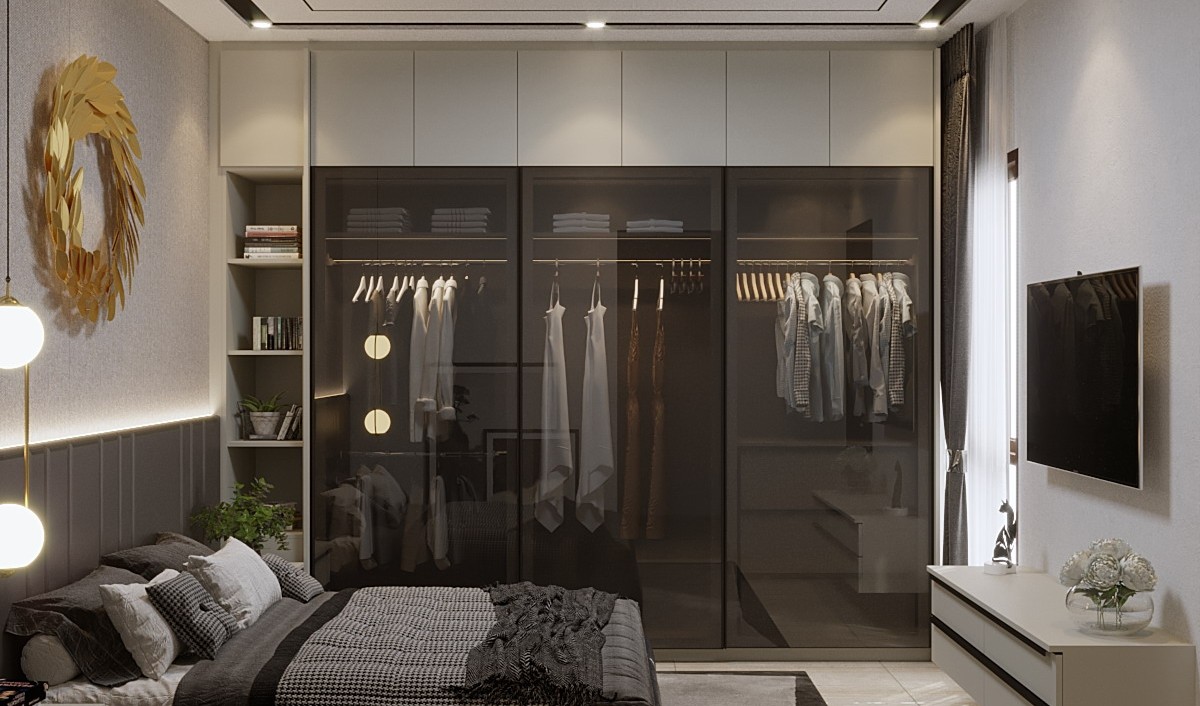
3. Built-In Wardrobe: Maximising Every Centimetre of Wall Space

In a small apartment, wall space is the most valuable asset available. And there is no more efficient way to utilise walls than a floor-to-ceiling built-in wardrobe.

Unlike freestanding wardrobes that consume 'visual space' with their legs and create a gap above that collects dust, a built-in wardrobe integrates seamlessly with the wall. The result is a clean, intentional appearance — and, most critically, far greater storage capacity within the same footprint.

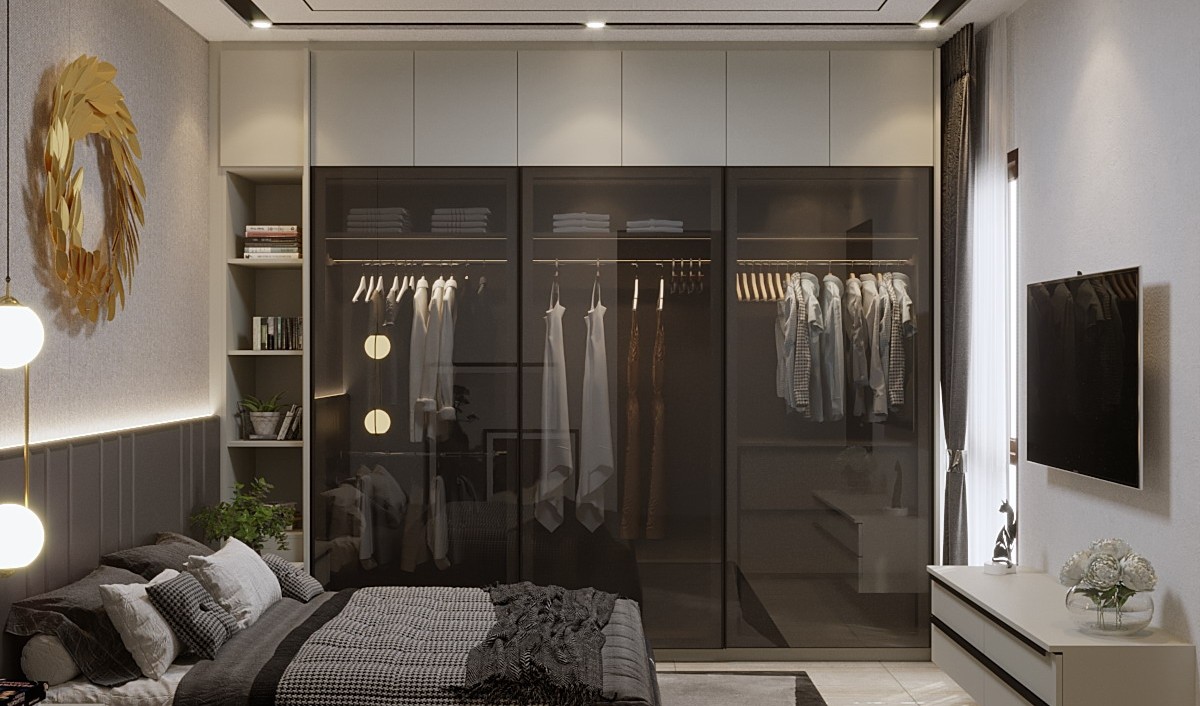
In Japandi design, wardrobe doors ideally employ a sliding system to eliminate swing space requirements, with a wood veneer or matte duco finish that harmonises with the surrounding wall colour. When the doors are closed, the wardrobe appears to 'disappear' into the wall — creating an impression of a clean, spacious room.

The detail that makes the greatest difference: a concealed door — a flush-panel door designed to sit level with the surrounding wall panel, with no protruding handle. With a concealed door, the transition between the wardrobe and its surroundings becomes seamless, and the room reads as a unified whole rather than a collection of adjacent furniture pieces.

📎 Internal Link: View Metric's custom built-in wardrobe collection at metric.id/inspiration

4. The Tatami Area: One Element, Many Functions

One of the greatest contributions of Japanese aesthetics to Japandi design is the concept of the tatami area — a low platform raised several centimetres above the main floor level, typically surfaced in timber or bamboo, that functions as a multi-purpose zone.

In the context of a small apartment, the tatami area is the most intelligent storage solution available. Beneath the platform, concealed drawers store everything from seasonal clothing and extra blankets to sports equipment and travel luggage — all neatly organised and easily accessible, yet invisible in daily life.

Above the platform, the tatami area functions as a relaxation seating area, a low-table dining space, or even a guest bed that folds away. During the day it is a comfortable reading nook. At night, with the addition of a thin mattress, it becomes a perfectly adequate guest sleeping space.

For a studio or one-bedroom apartment, a well-designed tatami area can simultaneously eliminate the need for a conventional sofa, coffee table, additional storage cabinet, and guest bed — saving the equivalent floor space of one large piece of furniture.

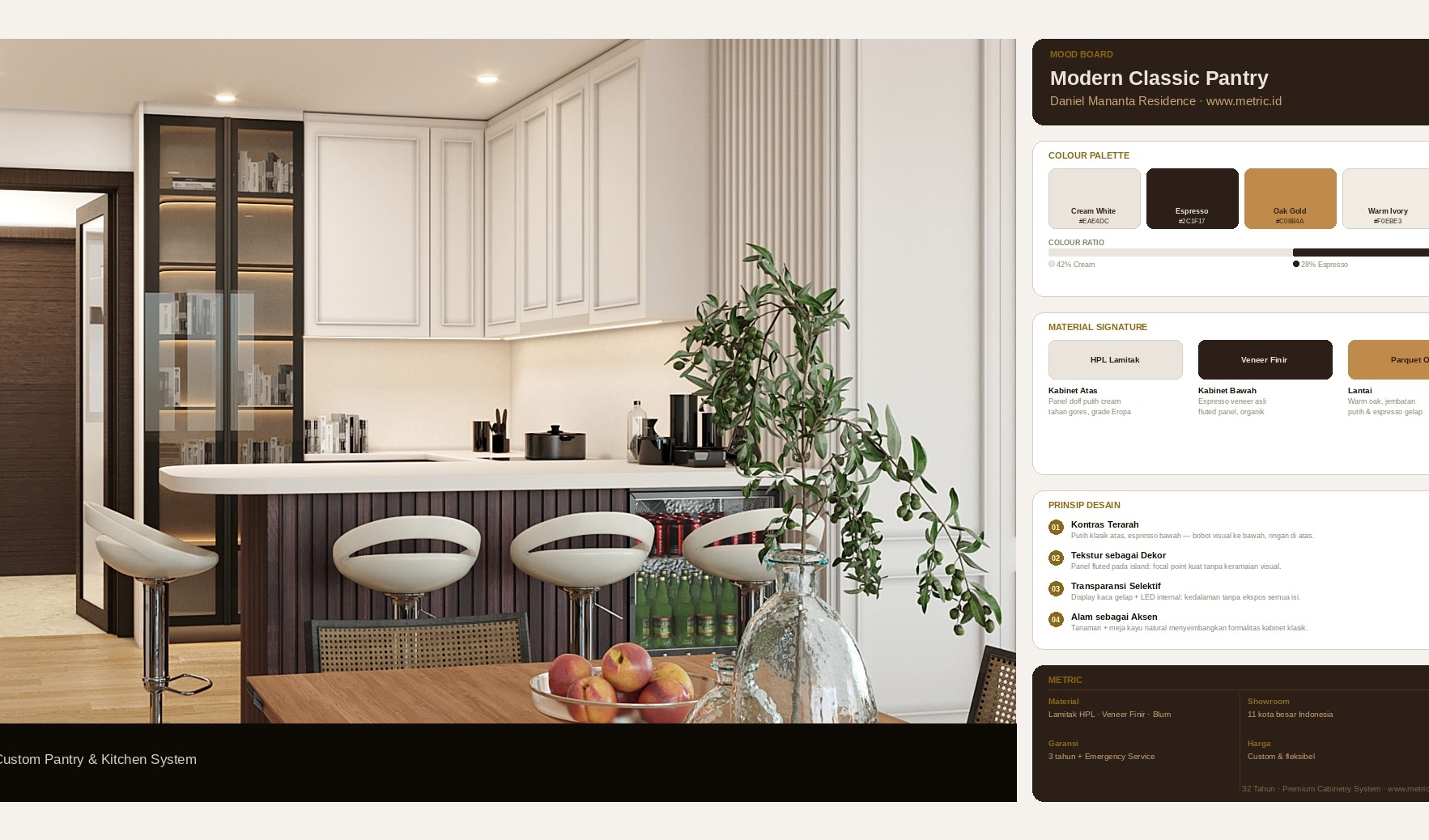
5. Compact Kitchen Set: A Small Kitchen That Works to Its Maximum

In a small apartment, the kitchen is almost always the most challenging area to design. A limited space must accommodate all full kitchen functions — cooking, washing, preparation, and storage — without making the room feel cramped and oppressive.

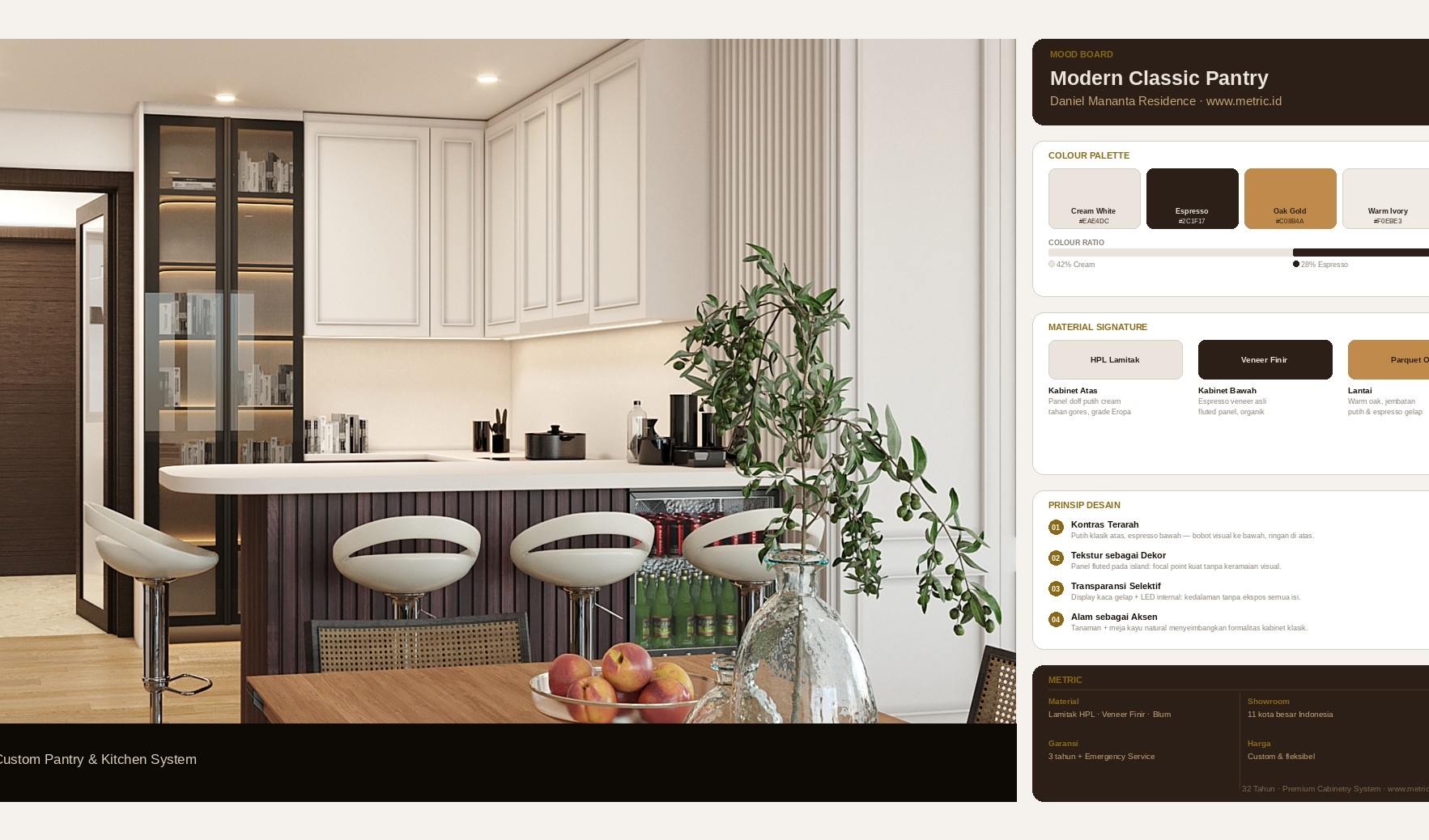
The Japandi approach to a compact kitchen set centres on a minimalist yet functional principle: conceal all equipment that is not in active use, and display only what is genuinely necessary. Upper and lower cabinetry that covers the entire kitchen wall — with flush panels and no excessive ornamentation — creates a clean appearance that does not impose on the room.

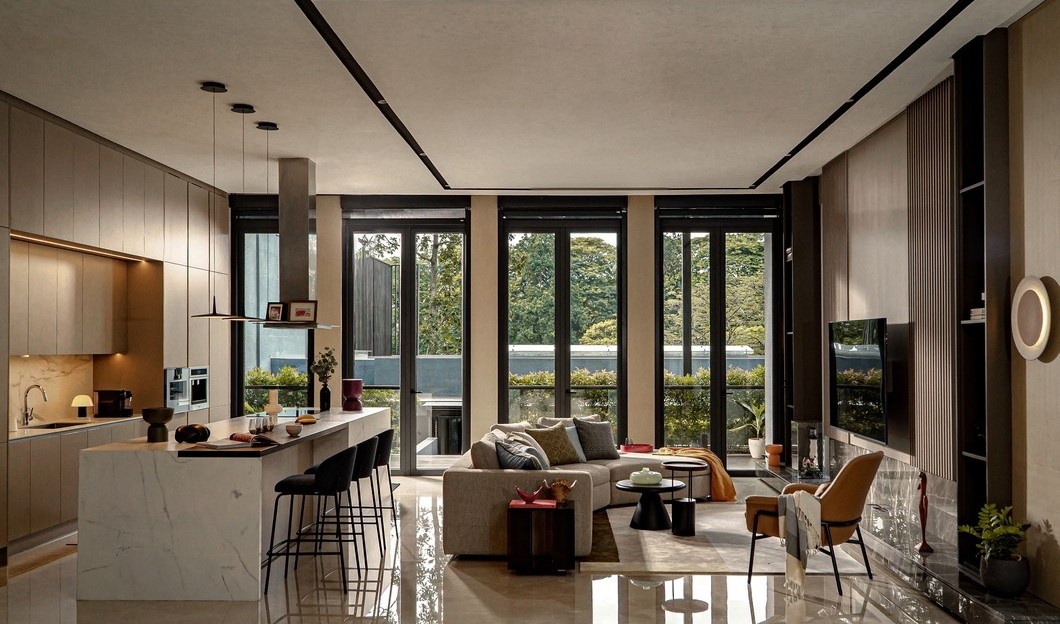
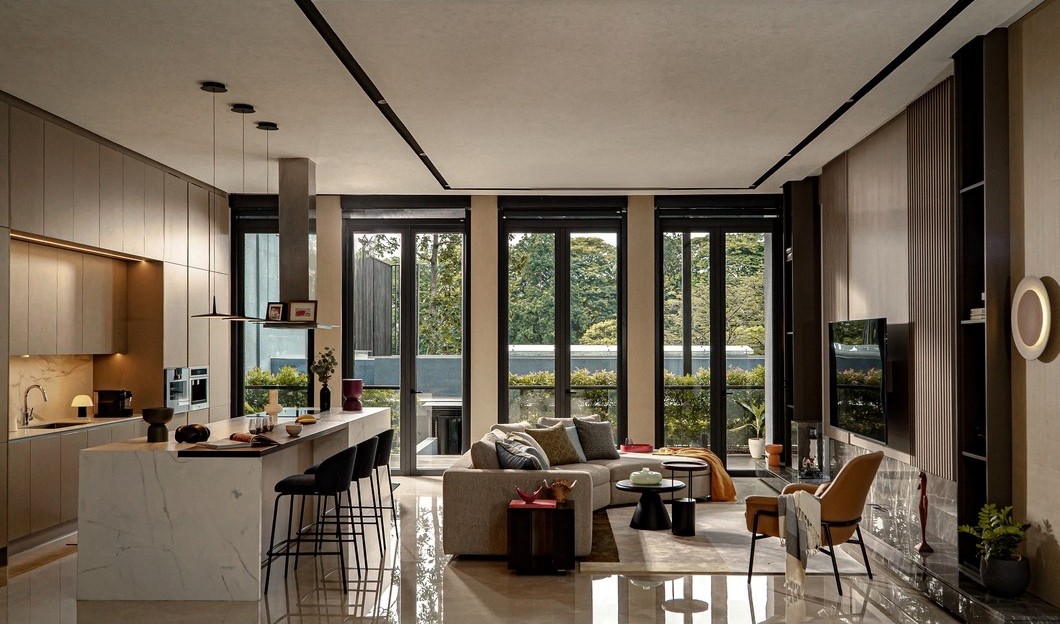
For apartments with an open-plan kitchen and living area, a kitchen island or small bar counter can serve as a functional zone divider as well as a breakfast bar. This eliminates the need for a separate dining table and saves considerable floor space.

A detail frequently overlooked yet highly impactful: under-cabinet lighting — LED strips concealed beneath the upper cabinets that illuminate the work surface. Beyond their functional benefit, this lighting creates visual depth that makes the kitchen set feel more premium and the room as a whole feel warmer and more inviting.

📎 Internal Link: View Metric's compact kitchen set & pantry collection at metric.id/inspiration

6. Multifunctional Furniture: Smart Investment for Limited Space

Beyond built-in systems, the selection of the right freestanding furniture is equally critical to the success of Japandi design in a small apartment. The governing principle: every piece of furniture must be capable of performing at least two functions.

Some of the most effective multifunctional furniture choices for a Japandi apartment:

  • **Sofa bed** — a sofa during the day, a bed at night. Select a low-profile model in a neutral tone to maintain the Japandi aesthetic.
  • **Wall-mounted fold-down table** — a work desk that folds flat against the wall when not in use, reclaiming up to 1.5 m² of floor space.
  • **Ottoman with internal storage** — seating, coffee table, and storage for extra cushions or blankets, all in one compact form.
  • **Modular wall shelving** — replaces large freestanding cabinets with a vertical storage system that can be reconfigured as needs evolve.
  • **Large mirror with slim frame** — not furniture in the traditional sense, but one that visually doubles the perceived size of the room while functioning as a decorative element.

7. Lighting and Plants: The Finishing Details That Make the Difference

Two final elements that frequently determine whether a Japandi apartment feels genuinely 'alive' or still reads as a furniture catalogue are lighting and plants.

For lighting, avoid a single ceiling fixture that evenly and flatly illuminates the entire room. Employ layered lighting: ambient ceiling light, a reading lamp beside the sofa or tatami area, and a small table lamp as a warm accent in a corner of the room. Use bulbs with a colour temperature of 2700–3000K (warm white) to create an atmosphere that feels warm and welcoming.

For plants, select varieties that thrive in indoor conditions with indirect light: monstera, pothos, sansevieria, or ZZ plant. Place them in ceramic or cement pots in neutral tones that reinforce the Japandi aesthetic. One large plant in the corner of a room is far more impactful than many small plants scattered throughout.

✦  METRIC: AFFORDABLE LUXURY — INNOVATION FOR BETTER LIVING

For a compact residence such as an apartment, every design decision must work twice as hard. This is where an important question arises: why choose Metric rather than simply purchasing ready-made furniture from a retail store?

The answer lies in a fundamental distinction between mass-produced products and a custom-designed interior system. Metric is premium because no two apartments are identical — corridor widths, structural beam positions, ceiling heights, and door placements differ across every unit. A Metric built-in wardrobe is designed and produced to the precise dimensions of your specific space, utilising every available centimetre — something that standard-size products are inherently incapable of achieving.

Using European-grade materials such as Lamitak HPL, Finir natural wood veneer, and Blum precision fittings, every Metric cabinet not only looks premium — it is engineered to endure years of intensive daily use in a high-occupancy residence. Produced across 2 ISO-certified factories with high-precision CNC machinery, and protected by a 3-year product warranty and emergency service support.

That is the meaning of Affordable Luxury in the Metric context: luxury that is planned, not luxury that overextends. An interior investment that is genuinely worthwhile — because your compact home deserves the best, not a compromise.

Metric · Innovation for Better Living · 32 Years · 11 Showrooms Indonesia · www.metric.id

Conclusion

Japandi design is not merely an aesthetic trend — it is a philosophy that addresses the genuine needs of the modern apartment dweller: to live with fewer possessions but higher quality, in a limited space that does not feel confining, with an aesthetic that brings calm to the midst of busy urban life.

The key to its success lies in an interior system designed with precision: a built-in wardrobe that utilises every available centimetre of wall space, a tatami area that stores more than it appears to, a kitchen set that conceals disorder behind clean surfaces, and concealed doors that create a seamless, unified room.

All of this requires a production partner that not only understands aesthetics, but is capable of executing them with the high precision that your apartment's unique dimensions demand.

"I have been using Metric for 10 years, and Metric always prioritises service and quality, plus the design is always up-to-date."  — Mr. Sucipto, Medan

Consult with Metric's design team at your nearest showroom, or explore hundreds of design inspirations at www.metric.id. With a 3-year product warranty, emergency service support, and 11 showrooms across Indonesia, your Japandi dream apartment is closer than you think.


© Metric | Innovation for Better Living | www.metric.id | @metric_id | 32 Years of Premium Interior Design in Indonesia

Metric
June 02, 2026
Smart Solutions for Small Apartments: Japandi Design with Multifunctional Furniture

Living in an apartment of 30 to 60 square metres in a major city such as Jakarta is no longer a compromise — it is a lifestyle deliberately chosen by a generation of young professionals who prioritise strategic location, mobility, and the efficiency of daily life. Yet one challenge almost invariably accompanies this choice: how do you make a space this small feel genuinely open, functional, and aesthetically considered?

The answer has long been discovered in Japan and Scandinavia — two countries that, through the constraints of limited land and climate, have given rise to the most efficient design philosophies in the world. The fusion of the two, now widely recognised as Japandi design, is the most complete answer to the small apartment challenge in Indonesia today.

This article explores in depth what Japandi is, why it works so effectively for compact apartments, and — most critically — how the right interior system is the key to realising it in reality, not merely as an aesthetic on paper.

1. Understanding Japandi: A Design Philosophy from Two Cultures

Japandi is a portmanteau of *Japanese* and *Scandinavian* — the fusion of two aesthetics that, despite originating from opposite sides of the world, share deeply aligned core values.

From Japanese aesthetics, Japandi draws on the concept of *wabi-sabi* — the beauty in imperfection and natural simplicity — as well as the philosophy of *ma* (間), the value of empty space. In interior design, this means treating every unoccupied surface as a design element in itself, not something that must immediately be filled.

From Scandinavian aesthetics, Japandi takes the concept of *hygge* — warmth, comfort, and conviviality — alongside the approach of *form follows function*, where every element must have a clear purpose before it can claim its place in the room.

The result is a design style that foregrounds natural materials, warm neutral colour palettes, clean lines, and high functionality — a perfect combination for the small apartment that must work hard every single day.

📎 Internal Link: View Japandi design inspiration at metric.id/inspiration

2. Colour Palette and Materials: The Foundation of Japandi Aesthetics

No aspect more fundamentally determines the success of a Japandi interior than the selection of the right colours and materials. An error here will make the entire space feel as though it is 'trying too hard', losing the organic tranquillity that is the essence of the style.

The Japandi colour palette centres on warm neutrals: warm white, warm cream, soft warm-toned grey, and gentle beige. These colours are not merely visually neutral — they actively reflect light, making rooms feel brighter and more open without additional light sources.

As accents, Japandi uses colours drawn directly from nature: deep sage green, rich matte black, or warm timber brown. One or two accent colours are applied selectively — on cushions, plant pots, or photo frames — to prevent the space from feeling excessively pale and monotonous.

Materials are the soul of Japandi design. Light warm-toned timber (such as oak or ash) dominates furniture and cabinetry. Rough linen for textiles. Textured stone or ceramic for floor surfaces. Bamboo for accessories. Every material is chosen for its connection to nature, not for glossiness or demonstrative luxury.

For built-in cabinetry and furniture, wood veneer is the most harmonious choice for Japandi aesthetics — delivering the warmth and organic quality of natural timber with unique, non-repetitive grain patterns that are far more authentic than standard HPL laminates.

🖼 Alt Text: Finir wood veneer detail on Metric built-in wardrobe, warm natural grain pattern characteristic of Japandi design

3. Built-In Wardrobe: Maximising Every Centimetre of Wall Space

In a small apartment, wall space is the most valuable asset available. And there is no more efficient way to utilise walls than a floor-to-ceiling built-in wardrobe.

Unlike freestanding wardrobes that consume 'visual space' with their legs and create a gap above that collects dust, a built-in wardrobe integrates seamlessly with the wall. The result is a clean, intentional appearance — and, most critically, far greater storage capacity within the same footprint.

In Japandi design, wardrobe doors ideally employ a sliding system to eliminate swing space requirements, with a wood veneer or matte duco finish that harmonises with the surrounding wall colour. When the doors are closed, the wardrobe appears to 'disappear' into the wall — creating an impression of a clean, spacious room.

The detail that makes the greatest difference: a concealed door — a flush-panel door designed to sit level with the surrounding wall panel, with no protruding handle. With a concealed door, the transition between the wardrobe and its surroundings becomes seamless, and the room reads as a unified whole rather than a collection of adjacent furniture pieces.

📎 Internal Link: View Metric's custom built-in wardrobe collection at metric.id/inspiration

4. The Tatami Area: One Element, Many Functions

One of the greatest contributions of Japanese aesthetics to Japandi design is the concept of the tatami area — a low platform raised several centimetres above the main floor level, typically surfaced in timber or bamboo, that functions as a multi-purpose zone.

In the context of a small apartment, the tatami area is the most intelligent storage solution available. Beneath the platform, concealed drawers store everything from seasonal clothing and extra blankets to sports equipment and travel luggage — all neatly organised and easily accessible, yet invisible in daily life.

Above the platform, the tatami area functions as a relaxation seating area, a low-table dining space, or even a guest bed that folds away. During the day it is a comfortable reading nook. At night, with the addition of a thin mattress, it becomes a perfectly adequate guest sleeping space.

For a studio or one-bedroom apartment, a well-designed tatami area can simultaneously eliminate the need for a conventional sofa, coffee table, additional storage cabinet, and guest bed — saving the equivalent floor space of one large piece of furniture.

5. Compact Kitchen Set: A Small Kitchen That Works to Its Maximum

In a small apartment, the kitchen is almost always the most challenging area to design. A limited space must accommodate all full kitchen functions — cooking, washing, preparation, and storage — without making the room feel cramped and oppressive.

The Japandi approach to a compact kitchen set centres on a minimalist yet functional principle: conceal all equipment that is not in active use, and display only what is genuinely necessary. Upper and lower cabinetry that covers the entire kitchen wall — with flush panels and no excessive ornamentation — creates a clean appearance that does not impose on the room.

For apartments with an open-plan kitchen and living area, a kitchen island or small bar counter can serve as a functional zone divider as well as a breakfast bar. This eliminates the need for a separate dining table and saves considerable floor space.

A detail frequently overlooked yet highly impactful: under-cabinet lighting — LED strips concealed beneath the upper cabinets that illuminate the work surface. Beyond their functional benefit, this lighting creates visual depth that makes the kitchen set feel more premium and the room as a whole feel warmer and more inviting.

📎 Internal Link: View Metric's compact kitchen set & pantry collection at metric.id/inspiration

6. Multifunctional Furniture: Smart Investment for Limited Space

Beyond built-in systems, the selection of the right freestanding furniture is equally critical to the success of Japandi design in a small apartment. The governing principle: every piece of furniture must be capable of performing at least two functions.

Some of the most effective multifunctional furniture choices for a Japandi apartment:

  • **Sofa bed** — a sofa during the day, a bed at night. Select a low-profile model in a neutral tone to maintain the Japandi aesthetic.
  • **Wall-mounted fold-down table** — a work desk that folds flat against the wall when not in use, reclaiming up to 1.5 m² of floor space.
  • **Ottoman with internal storage** — seating, coffee table, and storage for extra cushions or blankets, all in one compact form.
  • **Modular wall shelving** — replaces large freestanding cabinets with a vertical storage system that can be reconfigured as needs evolve.
  • **Large mirror with slim frame** — not furniture in the traditional sense, but one that visually doubles the perceived size of the room while functioning as a decorative element.

7. Lighting and Plants: The Finishing Details That Make the Difference

Two final elements that frequently determine whether a Japandi apartment feels genuinely 'alive' or still reads as a furniture catalogue are lighting and plants.

For lighting, avoid a single ceiling fixture that evenly and flatly illuminates the entire room. Employ layered lighting: ambient ceiling light, a reading lamp beside the sofa or tatami area, and a small table lamp as a warm accent in a corner of the room. Use bulbs with a colour temperature of 2700–3000K (warm white) to create an atmosphere that feels warm and welcoming.

For plants, select varieties that thrive in indoor conditions with indirect light: monstera, pothos, sansevieria, or ZZ plant. Place them in ceramic or cement pots in neutral tones that reinforce the Japandi aesthetic. One large plant in the corner of a room is far more impactful than many small plants scattered throughout.

✦  METRIC: AFFORDABLE LUXURY — INNOVATION FOR BETTER LIVING

For a compact residence such as an apartment, every design decision must work twice as hard. This is where an important question arises: why choose Metric rather than simply purchasing ready-made furniture from a retail store?

The answer lies in a fundamental distinction between mass-produced products and a custom-designed interior system. Metric is premium because no two apartments are identical — corridor widths, structural beam positions, ceiling heights, and door placements differ across every unit. A Metric built-in wardrobe is designed and produced to the precise dimensions of your specific space, utilising every available centimetre — something that standard-size products are inherently incapable of achieving.

Using European-grade materials such as Lamitak HPL, Finir natural wood veneer, and Blum precision fittings, every Metric cabinet not only looks premium — it is engineered to endure years of intensive daily use in a high-occupancy residence. Produced across 2 ISO-certified factories with high-precision CNC machinery, and protected by a 3-year product warranty and emergency service support.

That is the meaning of Affordable Luxury in the Metric context: luxury that is planned, not luxury that overextends. An interior investment that is genuinely worthwhile — because your compact home deserves the best, not a compromise.

Metric · Innovation for Better Living · 32 Years · 11 Showrooms Indonesia · www.metric.id

Conclusion

Japandi design is not merely an aesthetic trend — it is a philosophy that addresses the genuine needs of the modern apartment dweller: to live with fewer possessions but higher quality, in a limited space that does not feel confining, with an aesthetic that brings calm to the midst of busy urban life.

The key to its success lies in an interior system designed with precision: a built-in wardrobe that utilises every available centimetre of wall space, a tatami area that stores more than it appears to, a kitchen set that conceals disorder behind clean surfaces, and concealed doors that create a seamless, unified room.

All of this requires a production partner that not only understands aesthetics, but is capable of executing them with the high precision that your apartment's unique dimensions demand.

"I have been using Metric for 10 years, and Metric always prioritises service and quality, plus the design is always up-to-date."  — Mr. Sucipto, Medan

Consult with Metric's design team at your nearest showroom, or explore hundreds of design inspirations at www.metric.id. With a 3-year product warranty, emergency service support, and 11 showrooms across Indonesia, your Japandi dream apartment is closer than you think.


© Metric | Innovation for Better Living | www.metric.id | @metric_id | 32 Years of Premium Interior Design in Indonesia

More News?
Back to Blog
Full Story: Read More